Sunshine Coast Beach Guide
Beaches Near Marcoola: Yaroomba, Mudjimba, Coolum And Spring Swims
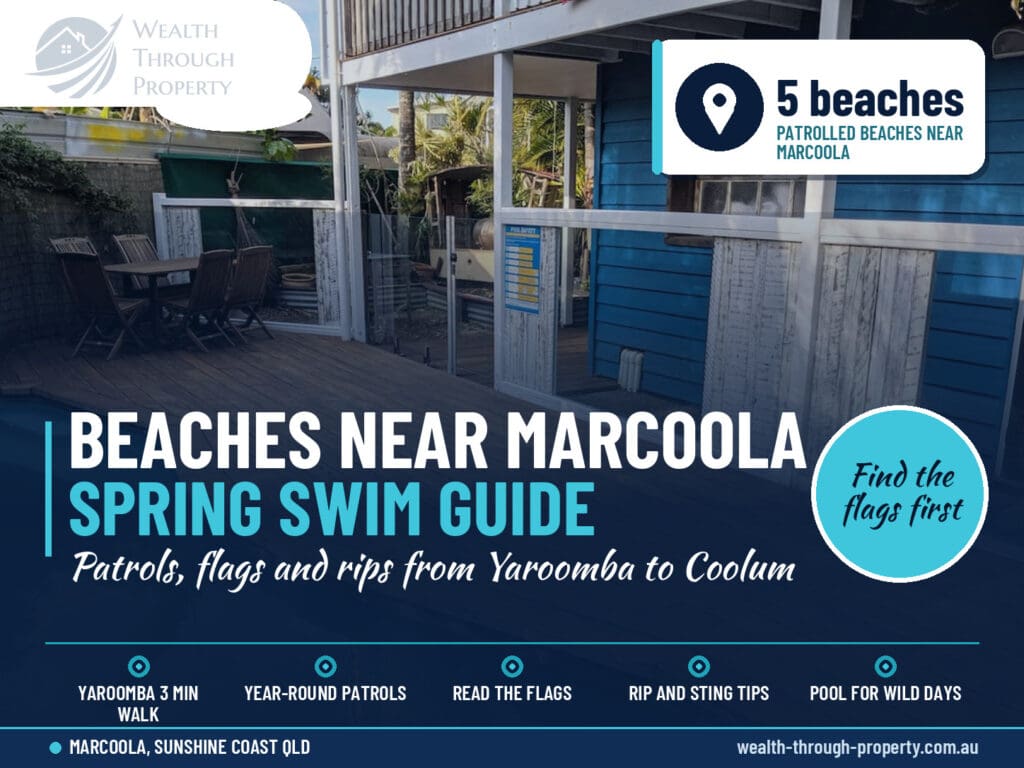
Marcoola sits in the middle of one long, open run of Sunshine Coast sand. Walk a few minutes from the street and you are on Yaroomba Beach; drive a few more and you can choose between Marcoola, Mudjimba, Twin Waters and Coolum, each with its own patrol pattern, facilities and personality. This guide explains which beach suits which kind of swim this spring, how the patrols work, how to read the flags and rips, and how to plan a group beach holiday that still works when the surf does not.
Key Takeaway
From mid October to early December the volunteer patrol season is running on this coast, the water is warming and the Queensland school term keeps the beaches calmer on weekdays until Friday 11 December. Marcoola and Yaroomba are patrolled seasonally, while Mudjimba, Twin Waters and Coolum Beach are listed by council as patrolled year round. Check the day's patrol times on BeachSafe, then pick the beach.
Before Anyone Gets Wet
A two-minute check each morning saves a wasted trip and keeps the group swimming in the right place.
The Five Beaches In One Line Each
Listed from north to south, all within a short drive of Marcoola.
Why Spring Is The Right Time To Learn These Beaches
The stretch of coast between Coolum and the Maroochy River is one long run of open sand broken only by the Point Arkwright headland. Sunshine Coast Council numbers its beach access points along it, and the numbers tell the story: Coolum Beach is access points 68 to 81, Yaroomba starts in the high 80s, Marcoola runs to 112, Mudjimba runs from 117 to 131 and Twin Waters continues to 136 before the river mouth. It is effectively one beach with several names, several surf clubs and several different moods.
Spring is when that beach comes back to life for swimmers. Marcoola Surf Life Saving Club says its volunteers patrol Marcoola Beach from September until May each year, and the council lists Coolum North as patrolled seven days a week from the September school holidays to the Easter school holidays. That means the flags are back at the quieter beaches as well as the busy ones.
Timing also helps. Queensland state school Term 4 runs from Tuesday 6 October to Friday 11 December 2026, so mid October to early December gives families with pre-schoolers, couples, retirees and adult groups a window of warm days without the full summer-holiday crowd. Weekends are livelier, weekdays are often very quiet.
Yaroomba Beach: The One At The End Of The Street
Yaroomba is the beach most guests reach first from the northern side of Marcoola. Council describes it as an open surf beach and a very popular spot for surfers, running up towards the Point Arkwright headland. It feels wide and natural, with dune vegetation behind the sand and sandy tracks leading down from the streets.
The swimming patrol here is near Birrahl Park at beach access points 89 and 90, off Warragh Parade. Council notes there is no lifeguard tower at Yaroomba: lifeguards operate out of a vehicle during patrol times. The patrol is listed as seasonal, so look up the day's hours on BeachSafe before walking down with a swim in mind.
Away from the patrolled area, Yaroomba is best treated as a walking and watching beach. Early mornings are lovely for a barefoot walk with a coffee, a look at the surf and a feel for the conditions before deciding where to swim later. Council also notes that walkers can head north towards Coolum over the headland using the tracks and boardwalks there, which turns a beach walk into a longer coastal outing.
Marcoola Beach And The Surf Club
Marcoola Beach is the next stretch south. Council describes it as a quieter open stretch of beach surrounded by parklands, covering access points 98 to 112. Marcoola Surf Life Saving Club is at 64 to 76 Marcoola Esplanade, at beach access point 103, beside Felix Parry Park.
The club says its volunteers patrol from September until May, and that outside those months Surf Life Saving Queensland and the Sunshine Coast Council Lifeguard Service provide mid-week and weekend patrols. For daily patrol hours, the club and council both point visitors to BeachSafe. In practice, the flags near the club are the place to aim for when the group wants a swim close to home.
The club is also a handy meeting point. Its website lists venue hours of 10am to 10pm Monday to Thursday, 10am to late on Friday and Saturday, and 10am to 10pm on Sunday. Council notes that restaurants and takeaway food outlets are nearby, which makes it easy to turn a swim into lunch without moving the car.
For groups, Marcoola is often the best everyday beach: quieter than Coolum, close to the house, with a club and park as a base. The trade-off is that the patrol is seasonal, so check it is operating on the day you plan to swim.
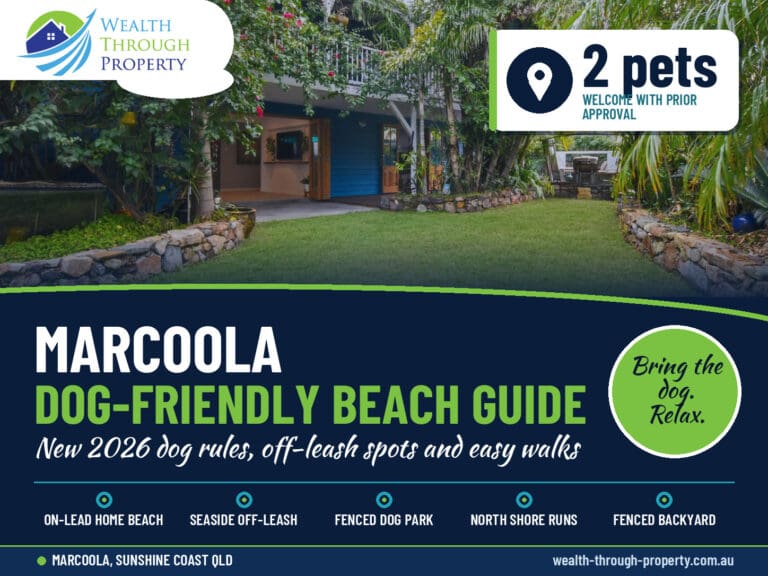
Dog owners should note council's Marcoola rule: dogs may be off leash only between access points 97 and 98, from 5am to 8am and from 5pm to 8pm, or as shown on signs, and owners must carry their own dog bags because the dispensers are often empty. WTP's dog-friendly Marcoola guide covers the wider rules and walks.
Mudjimba Beach: Year-Round Patrols And A Playground
Mudjimba is the next beach south of Marcoola and one of the most useful for families. Council lists it as patrolled year round, covering access points 117 to 131, with Mudjimba Surf Life Saving Club at access point 123 next to Power Memorial Park.
Council describes Power Memorial Park as a great park with a playground, with cafes, shops and takeaway outlets close to the beach and Mudjimba Holiday Park nearby. That combination is exactly what parents want: a swim between the flags, a play in the park when little ones are cold or sandy, and a coffee or ice cream within easy reach.
Offshore you will see Mudjimba Island, which council notes is popular with experienced surfers and fishers. It is a striking backdrop for photos, but it is not a swim target from the beach. Keep swimming to the patrolled area and treat the island as scenery unless you are on an organised tour.
Best for
Families with young children, mixed-age groups and anyone who wants a patrol outside the volunteer season.
Base yourself at
Power Memorial Park beside the surf club at access point 123.
Check first
Daily patrol hours on BeachSafe and any warning signs at the access point.
Twin Waters And The North Shore
Keep heading south and the beach becomes Twin Waters, sometimes called Maroochy North Shore. Council describes it as a quieter open stretch with unspoilt surroundings, covering access points 131 to 136, with Twin Waters Resort next door.
Twin Waters is listed as patrolled year round, with a lifeguard tower and public toilets at access point 131. There are more amenities, showers and picnic shelters at the end of North Shore Road, plus a dog wash near the amenities block in the North Shore Road park.
The far end of North Shore Road is well known as an off-leash dog beach. Council's rules allow dogs off lead at all times on the ocean side, between the low water mark and the base of the dune, from 140 metres north of access point 132 to access point 136, including Pin Cushion Island and part of the Maroochy River up to access point 136. Dogs must be on lead on the river side west of access point 136, and they are not permitted in the dunal bushland conservation reserve. Council is clear that the off-leash beach at the end of the road is unpatrolled.
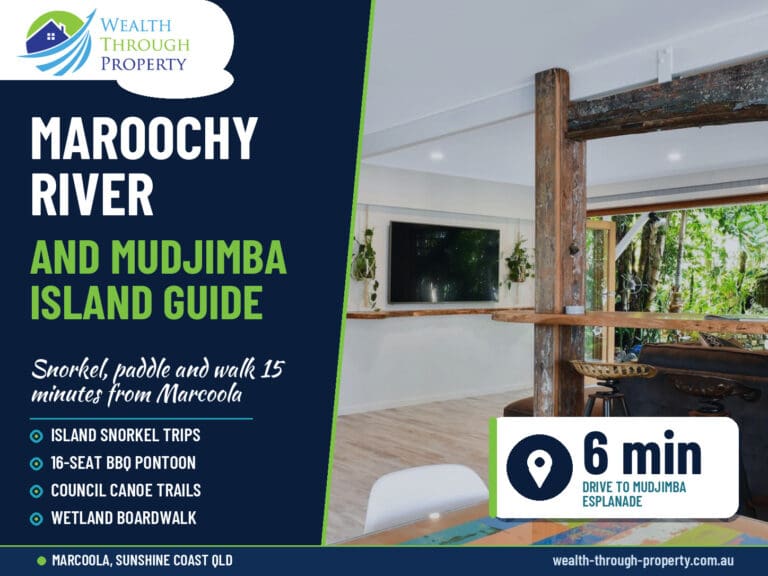
That makes Twin Waters a good beach for groups who want to split up: swimmers stay near the tower at access point 131 while dog walkers head to the off-leash end. Further south, council lists the Maroochy River Mouth patrol (access points 140 to 143) as running only in the September, Christmas and Easter school holidays, from 7:30am to 5pm, so it is not patrolled during the school term. Leave swimming there for another trip; WTP's earlier Maroochy River and Mudjimba Island guide covers paddling and river walks.
Coolum Beach And Coolum North: The Village Beach
Head north instead and you reach Coolum, the village beach of this part of the coast. Council calls it a family-friendly patrolled surf beach, patrolled year round, covering access points 68 to 81 and home to the Coolum Beach Surf Life Saving Club. Parks, a boardwalk, restaurants, cafes and takeaway outlets sit right behind the sand.
Tickle Park and the lifeguard tower are at access point 77, and the park has play and picnic facilities next to the surf club. Council also notes accessible matting is available on weekends during the volunteer patrol season, which can make a real difference for older relatives, prams and anyone who finds soft sand hard going.
Coolum North has its own patrol, listed by council as running seven days a week from the September school holidays to the Easter school holidays, from 7:30am to 5pm. It is a useful second option when the main beach is busy.
Dog owners should know that Coolum also has an off-leash area that applies at all times on the beach, from Lions and Norrie Job Park at the northern end of Coolum Beach Holiday Park (access point 72) to access point 68, about one kilometre north of the Stumers Creek car park. Dogs are not permitted in the dunes, the Stumers Creek Bushland Conservation Reserve or Noosa National Park.
Point Arkwright And The Unpatrolled Gaps
Between Yaroomba and Coolum the sand gives way to the rocky Point Arkwright headland. It is a beautiful place for a walk and a lookout over the coast in both directions, and council notes the tracks and boardwalks that let walkers continue north towards Coolum.
Point Arkwright does not appear on council's list of patrolled beaches. Rocks, surge and changing swell make headlands a place for looking rather than swimming. Keep children well back from wet rock, and avoid rock platforms altogether when the sea is rough.
How To Read The Flags On A Queensland Beach
Every patrolled beach on this stretch uses the same flag system, and it takes a minute to teach the whole group. The Queensland Government's beach safety advice sets it out clearly.
Red and yellow
The area lifesavers or lifeguards are patrolling and have assessed as the safest place to swim. Swim between them.
Red
The beach is closed. Do not enter the water.
Yellow
Potential hazards in the water. Read the yellow warning sign beside it for the details.
Red and white quartered
Emergency evacuation. Leave the water immediately.
Blue
An area set aside for surfing, kept separate from swimmers.
No flags
Healthdirect's rule of thumb is simple: no flags, no swim.
Before a big group heads down, agree on one meeting point near the flags, such as the surf club or the lifeguard tower. Children find their way back far more easily to a red and yellow flag than to a towel.
Rip Currents: How To Spot One And What To Do
Rip currents are one of the main hazards on open surf beaches like these, and avoiding them is a big part of why the flags matter. The red and yellow flags mark the area lifesavers or lifeguards have assessed as the safest place to swim on the day.
The Queensland Government lists the signs to look for: darker, deeper water; murky brown water; a choppy patch when the water around it is calm; foam or debris moving out to sea; and, in bigger surf, a smoother surface with much smaller waves. Healthdirect adds sandy-coloured water behind the breaking waves and fewer waves breaking in that spot.
If you are caught, both sources give the same core advice. Stay calm and do not swim against the current, because you will exhaust yourself. If you are a confident swimmer, swim parallel to the beach, or towards the breaking waves, until you are out of the rip. If you cannot get back, raise an arm straight up, call out for help and float to save energy. Healthdirect notes that floating may carry you back to a shallow sandbank.
Bluebottles, Sun And Other Summer Basics
Bluebottles are a familiar part of warm-season beach days on the east coast, and myDr notes they are the most common cause of jellyfish stings in Australia. A yellow flag means there are hazards in the water, so read the warning sign beside it and the signs at the access point before swimming.
For first aid, the myDr guide to bluebottle stings advises gently washing the area with sea water and carefully picking off any remaining tentacles, ideally with gloves. It says vinegar is not recommended for bluebottle stings. Then soak the sting in water around 45°C, or as hot as the person helping can comfortably tolerate, for at least 20 minutes, or stand under a hot shower for the same time. A cold pack may help if hot water is not available. See a doctor if pain, itching or blistering continues, and call 000 for chest tightness, difficulty breathing, a sting covering more than half a limb or a sting near the eye.
The sun deserves the same respect. The Queensland Government notes that Queensland has the highest rate of skin cancer in the world. Shirts, hats, sunscreen, shade and water make the difference between a great beach day and a miserable evening, and the middle of the day is the time to retreat to the shade or head home.
Which Beach Suits Which Group
Because all these beaches are close together, the easiest way to plan is to match the beach to the group on the day rather than picking one and sticking with it.
Toddlers and young kids
Mudjimba, for the year-round patrol and the playground at Power Memorial Park, or Coolum for Tickle Park.
Grandparents and prams
Coolum on a weekend during the volunteer season, when council lists accessible matting.
Quiet swim close to home
Marcoola near the surf club at access point 103, or Yaroomba near Birrahl Park, when patrols are on.
Surfers
Yaroomba, which council notes is very popular with surfers. Stay clear of swimming areas.
Dog owners
The off-leash end of Twin Waters or the Coolum off-leash stretch, with swimmers at the flags nearby.
Lunch after the swim
Coolum's esplanade or the cafes near Mudjimba, with Marcoola's food outlets close to the club.
What Else Is On Nearby This Spring
Beach days are the heart of a spring trip, but it helps to know what is happening around the coast in case the wind swings onshore. Sunshine Coast Council's October round-up, published on 30 September 2026, lists several events within easy reach.
In Coolum, Black Flag Brewing hosts Island Vibes featuring the Pacific Island Film Festival on 21 October and The Rubens' Group Therapy Tour with Selve on 29 October. Coolum Live: Rooftop Sessions with The Potbelleez is listed for 31 October at various Coolum venues, and The Brother's Grimm Spectacularthon is at Coolum Civic Centre on 30 October.
Across the region, ShowFest runs from 20 to 25 October with activity in Maroochydore, Nambour, Coolum and Kawana, Sunshine Coast Open House runs from 16 to 25 October at multiple locations, and a Story Walk runs at Maroochy Bushland Botanic Gardens from 12 October to 20 November. Further afield, Visit Sunshine Coast lists the Noosa Triathlon from 28 October to 1 November.
Event details can change, and many gigs sell out, so confirm dates, times and tickets with the organiser before planning a day around them.
Why Aaron's Beachside Boat House Works For A Spring Beach Holiday
Aaron's Beachside Boat House suits this kind of trip because the beach is close enough to be part of every day without being the only plan. The WTP listing puts Yaroomba Beach about a three-minute walk away, along a simple sandy track through native vegetation to the shoreline. That makes the sunrise walk, the quick surf check and the late-afternoon stroll effortless.
When the group wants a patrolled swim at Marcoola, Mudjimba, Twin Waters or Coolum, everyone can pile into the cars and be back at the house for lunch. On days when the surf is too big or the flags are not up, the private saltwater swimming pool gives the kids somewhere to swim at home, in a fully fenced landscaped backyard with a BBQ area.
The house sleeps up to 16 guests across six bedrooms, with two bathrooms, so a large family or two or three families can share one base. Two self-contained living zones, each with its own kitchen, let different parts of the group keep different rhythms: early risers heading to the beach, others sleeping in.
The listing also shows pet-friendly stays for up to two pets with prior approval, so the family dog can come along for those off-leash beach mornings. Confirm approval and house rules before booking.
Where Aaron's Beachside Boat House fits a spring beach trip
Yaroomba Beach is about a three-minute walk from the house, so sunrise walks and surf checks are easy, and the patrolled beaches at Marcoola, Mudjimba and Coolum are a short drive for a proper swim between the flags.
When the surf is too big, the private saltwater pool and fully fenced backyard with BBQ take over, and six bedrooms for up to 16 guests with two self-contained living zones give a big family room to spread out.
Aaron's Beachside Boat House
How A Big Group Uses The House Between Swims
Beach holidays with a big group are mostly about logistics: wet towels, sandy feet, hungry children and adults who want different things at the same time. The layout of the house helps with that.
The listing describes outdoor dining for 10 upstairs and 20 downstairs, so post-beach lunches and evening barbecues do not need anyone to eat in shifts. A sheltered timber deck with hammock seating runs alongside the home, and wide-opening doors connect the downstairs living area with the garden and covered outdoor space, so it is easy to move between the pool, the barbecue and the shade.
The downstairs level has its own kitchen, bar seating and lounge with a wall-mounted TV, while the upper level has a shared kitchen, lounge and dining zone. One generation can run the barbecue downstairs while another cooks a proper dinner upstairs. Bedroom 6 has three bunk beds, which gives the kids their own room.
A Three-Day Spring Beach Itinerary From Marcoola
Day One: Arrive And Learn The Beach
Check-in is from 3pm. Unpack, then walk the sandy track to Yaroomba for a first look at the beach. Notice where the patrol area sits near Birrahl Park, how the waves are breaking and where the access points are. Keep dinner simple at the house with a barbecue in the backyard.
Day Two: Patrolled Swim And A Village Lunch
Check BeachSafe after breakfast. If the flags are up at Marcoola, swim near the surf club at access point 103 and stay local. If the group includes young children, drive to Mudjimba instead for the year-round patrol and the playground at Power Memorial Park. Head home for the heat of the day, use the pool, then take a late walk on the beach.
Day Three: Coolum And The Headland
Drive north to Coolum for a swim between the flags near the tower at access point 77, then lunch on the esplanade and a play in Tickle Park. In the afternoon, walk the tracks around Point Arkwright for views up and down the coast. If the wind is wrong for swimming, choose one of the spring events nearby instead.
Departure Morning
Check-out is by 10am, so make the last beach visit an early walk at Yaroomba rather than a full swim session.
What To Pack For A Marcoola Beach Holiday
Swimwear, towels, rash shirts, broad-brimmed hats and plenty of sunscreen are the obvious items. Add a beach shade or umbrella, reusable water bottles and a small cooler for drinks and fruit, because the patrolled beaches are where you will want to stay longest.
For bluebottle days, a pair of disposable gloves in the beach bag makes it easier to remove tentacles, and knowing where the nearest hot shower is will help. Thongs or reef shoes are useful on hot sand and around the headland tracks.
For the group, a bright flag or umbrella that is easy to spot from the water helps children find their way back. Dog owners should pack bags, a lead, water and a towel, and check whether the house has any rules for sandy dogs.
Before Leaving Home: Your Marcoola Beach Check
Plan Your Marcoola Beach Stay
If a spring beach holiday with room for the whole group sounds right, start with the live availability and photos on the Aaron's Beachside Boat House listing. It shows the current sleeping setup, house rules and pet conditions, and you can book direct on the page.
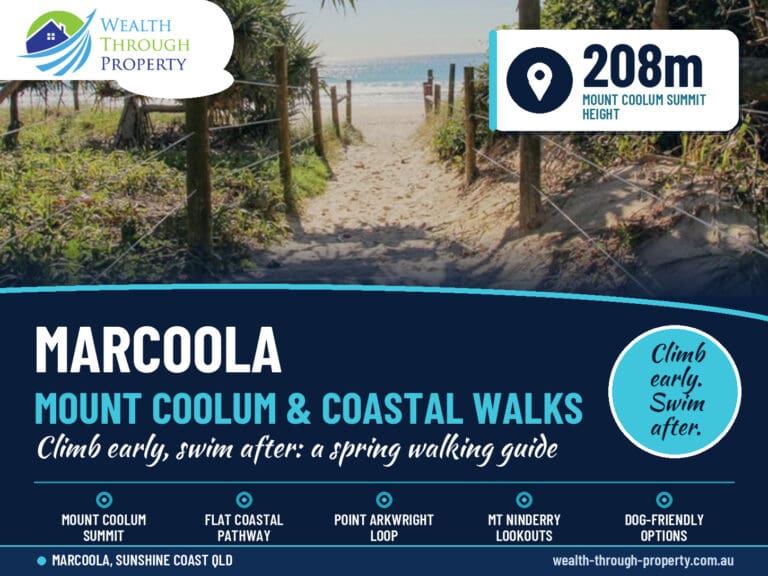
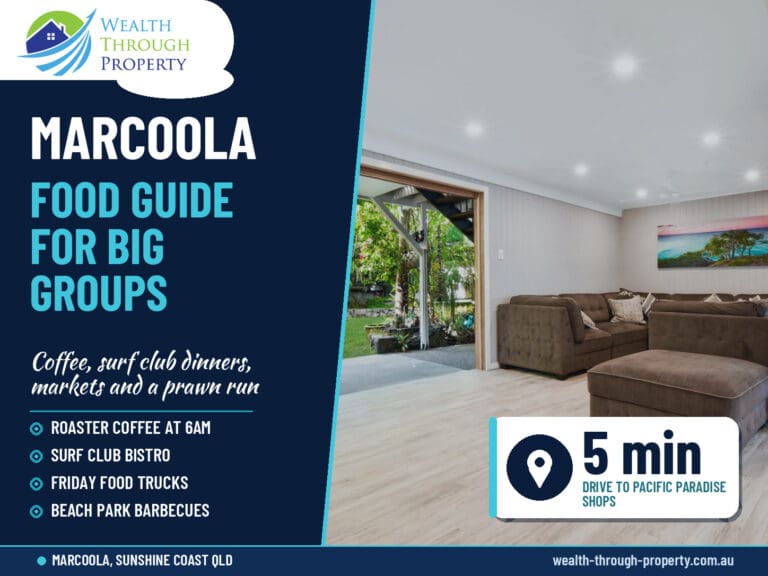
To compare other coastal stays, browse the full range of WTP Holiday Homes, and for more local ideas, from the Mount Coolum climb to the food scene and turtle season, read the other WTP holiday home guides.
When you have your dates, check the patrols, pack the hats and book your Marcoola beach house before the summer holidays fill the calendar.
FAQs About Beaches Near Marcoola
Is Marcoola Beach patrolled?
Yes, seasonally. Marcoola Surf Life Saving Club says its volunteers patrol Marcoola Beach from September until May each year, and that outside those months Surf Life Saving Queensland and the council lifeguard service provide mid-week and weekend patrols. The club is at access point 103 beside Felix Parry Park. Check BeachSafe for the day's patrol hours.
Which beaches near Marcoola are patrolled all year?
Sunshine Coast Council lists Mudjimba, Twin Waters and Coolum Beach as patrolled year round. Marcoola and Yaroomba are listed as seasonal, Coolum North runs from the September school holidays to the Easter school holidays, and the Maroochy River Mouth is patrolled only in the September, Christmas and Easter school holidays.
Is Yaroomba Beach safe for swimming?
Swim at Yaroomba only between the red and yellow flags while the patrol is operating near Birrahl Park at access points 89 and 90. Council notes there is no tower there and lifeguards work from a vehicle. Yaroomba is popular with surfers, so outside the flags it is best for walking.
What is the best beach near Marcoola for young children?
Mudjimba is a strong choice because council lists it as patrolled year round and Power Memorial Park beside the surf club has a playground. Coolum, with Tickle Park and its patrolled beach, is another good option for a bigger outing.
What do I do if I get caught in a rip?
Stay calm and do not swim against the current. Confident swimmers can swim parallel to the beach or towards the breaking waves to get out of it. If you cannot get back, raise an arm straight up, call for help and float to conserve energy.
How do I treat a bluebottle sting?
Wash the area with sea water and carefully remove any tentacles, ideally with gloves. Vinegar is not recommended for bluebottles. Soak the sting in water around 45°C, or as hot as the helper can comfortably tolerate, for at least 20 minutes. See a doctor if symptoms continue and call 000 for breathing difficulty or a large sting.
Can I take my dog on the beach at Marcoola?
Council allows dogs off leash at Marcoola only between access points 97 and 98, from 5am to 8am and from 5pm to 8pm, or as signed. Twin Waters and Coolum have larger off-leash areas. Keep dogs to the signed off-leash zones and times, and check current signs before you go.
When are the Queensland school holidays near the end of 2026?
Queensland state school Term 4 runs from Tuesday 6 October to Friday 11 December 2026, so the summer holidays start after that date. Weekdays during the school term are often quieter on the beaches than the summer holidays.
How far is Aaron's Beachside Boat House from the beach?
The WTP listing puts Yaroomba Beach about a three-minute walk away, along a sandy track through native vegetation. The other patrolled beaches in this guide are a short drive.
How many guests does Aaron's Beachside Boat House sleep?
Current WTP information lists six bedrooms and sleeping space for up to 16 guests, with two bathrooms, a private saltwater pool, a fully fenced backyard with a BBQ area and two self-contained living zones each with a kitchen. Check the live listing for the latest details.
Other properties to compare
Explore other stays connected to this area, guest type or holiday guide.